
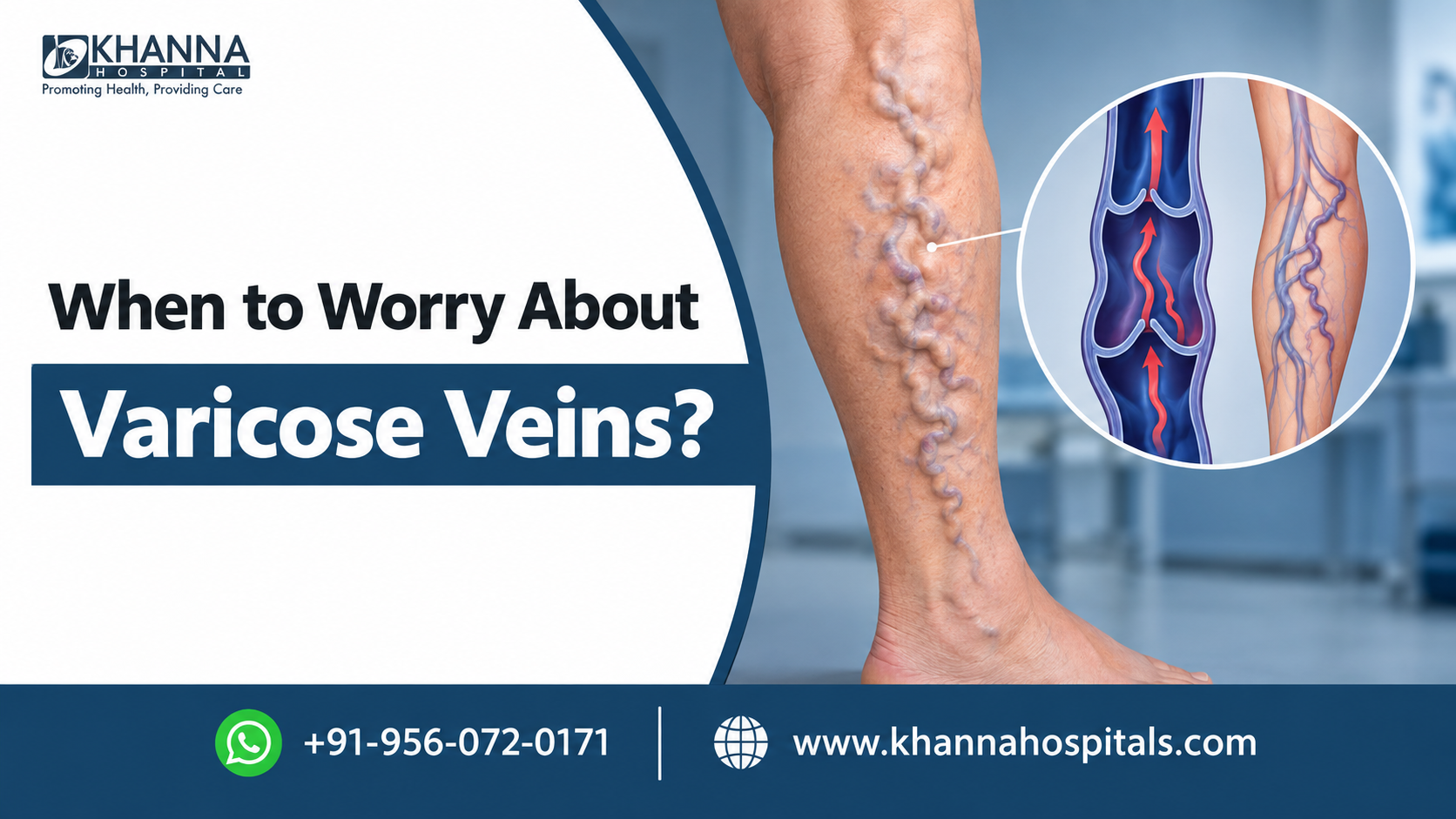
Varicose veins are enlarged, twisted, and often bluish or purplish veins that commonly appear on the legs. For many people, they are primarily a cosmetic concern and may not cause serious problems. However, varicose veins can sometimes cause significant symptoms or lead to complications that require medical attention.
Ask Your Query
Knowing when to worry about varicose veins can help you recognize symptoms that should not be ignored. Persistent pain, recurring swelling, skin discoloration, skin ulcers, bleeding, or symptoms that could indicate a blood clot are reasons to seek medical evaluation.
Varicose veins develop when the valves inside the veins do not work properly. These valves normally help blood travel upward toward the heart. When they become weak or damaged, blood can flow backward and pool in the veins. Over time, increased pressure can cause the veins to become enlarged and more visible.
While having visible varicose veins does not automatically mean you have a dangerous condition, symptoms and changes in the skin can indicate that the veins are affecting circulation more significantly.
What Are Varicose Veins?
Varicose veins are veins that have become enlarged and twisted, most often in the legs. They may appear as raised, rope-like veins beneath the skin.
They are different from small spider veins, which are usually thinner and appear as networks of red, blue, or purple lines close to the surface of the skin.
Varicose veins can develop when the one-way valves in the veins become less effective. Instead of blood moving efficiently toward the heart, some blood can move backward and accumulate in the veins. This can increase pressure within the veins and contribute to their enlargement.
Some people have varicose veins without experiencing any discomfort. Others may develop aching, heaviness, itching, swelling, or other symptoms.
When Should You Worry About Varicose Veins?
You should consider seeing a doctor when varicose veins cause persistent or worsening symptoms, particularly if they interfere with walking, standing, sleeping, work, or everyday activities.
It is especially important to seek medical attention if you notice:
- Persistent or worsening leg pain or aching
- Regular swelling of the leg or ankle
- Skin discoloration around the ankles
- Itching, dryness, eczema, or hardening of the skin
- Slow-healing wounds or open sores
- Bleeding from a varicose vein
- A vein that becomes painful, hard, red, or warm
- Sudden swelling and pain in one leg
These symptoms do not necessarily mean that you have a serious complication, but they warrant professional assessment.
1. Persistent Leg Pain or Aching
Occasional discomfort after spending a long day standing may occur with varicose veins. However, persistent or worsening pain should not simply be dismissed as a normal part of having varicose veins.
Some people experience a dull ache, throbbing, heaviness, or a feeling of pressure in the legs. Symptoms may become more noticeable after prolonged standing or toward the end of the day.
If your discomfort is occurring frequently or is becoming more severe, a doctor can evaluate your circulation and determine whether treatment may help.
2. Regular or Increasing Leg Swelling
Swelling around the ankles or lower legs can occur when blood pools in the veins.
Mild swelling that occasionally appears after prolonged standing may not be an emergency, but regular, persistent, or worsening swelling deserves medical attention.
Pay particular attention if the swelling:
- Happens frequently
- Gets progressively worse
- Is associated with pain or heaviness
- Is accompanied by skin changes
- Does not improve with rest or elevation
A healthcare professional can determine whether the swelling is related to venous circulation or another medical condition.
3. Skin Discoloration Around the Ankles
Changes in the color of the skin around the lower legs or ankles can be an important warning sign.
The skin may develop brownish, reddish, or darker areas. These changes can occur when increased pressure in the veins affects the surrounding tissues over time.
Skin discoloration associated with chronic venous problems should be assessed by a healthcare professional, particularly if it occurs alongside swelling, itching, pain, or skin thickening.
4. Itchy, Dry, or Hardened Skin
Varicose veins can sometimes be accompanied by changes in the skin.
You may notice:
- Dry or flaky skin
- Persistent itching
- Redness or irritation
- Eczema-like patches
- Skin that feels harder or thicker than usual
These changes should not be ignored if they persist or become worse.
Long-standing circulation problems can affect the tissues surrounding the veins, so early assessment may help prevent the condition from progressing.
5. Open Sores or Venous Ulcers
One of the more concerning complications associated with chronic venous problems is a venous leg ulcer.
These wounds often occur around the ankle area and may heal slowly. They can be painful and may become infected.
If you have a wound on your leg that is not healing normally, particularly if you also have varicose veins and swelling, arrange a medical evaluation.
Do not assume that a persistent sore will eventually heal on its own.
6. Bleeding From a Varicose Vein
Varicose veins are located relatively close to the surface of the skin and can sometimes bleed if the vein is injured.
Even a minor bump or scratch can occasionally cause significant bleeding.
If a varicose vein begins bleeding:
- Sit or lie down.
- Raise the affected leg if possible.
- Apply firm, continuous pressure to the bleeding area with clean cloth or gauze.
- Seek medical attention if bleeding does not stop promptly or is heavy.
A vein that has bled should also be discussed with a healthcare professional because treatment may help reduce the chance of recurrence.
7. A Vein That Becomes Red, Hard, or Tender
Another warning sign is a vein that suddenly becomes painful, firm, red, or warm.
This can occur with superficial thrombophlebitis, in which a vein near the surface becomes inflamed and develops a clot.
Although superficial thrombophlebitis is different from a deep vein thrombosis (DVT), symptoms involving a new painful or hardened vein should be evaluated so that the appropriate diagnosis can be made.
8. Sudden Swelling or Pain in One Leg
Sudden swelling and pain affecting one leg can be a warning sign of a deep vein thrombosis, or DVT.
A DVT is a blood clot in a deeper vein and can be serious because part of the clot can potentially travel to the lungs.
Seek prompt medical care if one leg suddenly becomes swollen, painful, warm, or noticeably different from the other.
Do not assume that sudden one-sided swelling is simply another symptom of your varicose veins.
9. Chest Pain or Shortness of Breath Requires Urgent Attention
Some symptoms associated with blood clots require emergency medical attention.
If you have symptoms such as:
- Sudden shortness of breath
- Chest pain, particularly pain that worsens with breathing
- Coughing up blood
- Fainting or severe dizziness
- A rapid or irregular heartbeat alongside these symptoms seek emergency medical care immediately.
These symptoms can potentially occur when a blood clot travels to the lungs, a condition known as a pulmonary embolism.
Why Do Varicose Veins Develop?
Several factors can increase the likelihood of developing varicose veins.
Age: The risk tends to increase with age because vein valves can become less effective over time.
Family History: People with a family history of varicose veins may have a higher likelihood of developing them.
Pregnancy: Pregnancy can increase pressure on the veins and cause hormonal and circulatory changes that contribute to varicose veins.
Prolonged Standing: Jobs or daily routines that require standing for long periods may increase pressure in the leg veins.
Obesity or Excess Weight: Additional body weight can increase pressure on the veins and may contribute to venous problems.
Limited Physical Activity: Regular movement helps the calf muscles assist the return of blood from the legs toward the heart. Long periods of sitting or inactivity can contribute to blood pooling.
Are Varicose Veins Always Dangerous?
No, Many varicose veins are not dangerous and may only cause cosmetic concerns or mild symptoms. However, the appearance of a vein alone does not tell you everything about its impact on circulation.
A person with relatively noticeable veins may have few symptoms, while someone with less obvious veins may experience significant pain, swelling, or skin changes.
For this reason, symptoms are important when deciding whether to seek an evaluation.
What Happens If You Ignore Varicose Veins?
Not every case of varicose veins will become worse. Some remain relatively stable for years.
However, symptomatic or progressive venous disease can lead to complications such as persistent swelling, skin changes, inflammation, bleeding, or ulcers.
Ignoring symptoms can also mean missing an opportunity to identify another condition that may require treatment.
If your symptoms are persistent or progressively worsening, it is better to have them assessed rather than trying to diagnose the cause yourself.
When Should You See a Doctor for Varicose Veins?
You should arrange a medical evaluation if your varicose veins are causing:
- Persistent pain or aching
- Frequent swelling
- Itching or skin irritation
- Skin discoloration
- Thickened or hardened skin
- Open wounds or ulcers
- Recurrent bleeding
- A painful, red, or hardened vein
Symptoms that are interfering with normal activities
A doctor can examine your legs, review your symptoms and medical history, and determine whether further testing is appropriate.
Depending on your symptoms, evaluation may include an ultrasound examination to assess blood flow and look for problems within the veins.
Can Varicose Veins Be Treated?
Yes. Varicose Veins Treatment depends on the severity of the condition, your symptoms, your overall health, and the veins involved.
A healthcare professional may recommend conservative measures such as:
- Regular physical activity
- Avoiding prolonged periods of standing or sitting
- Elevating the legs when appropriate
- Maintaining a healthy weight
- Compression therapy when medically appropriate
For people with troublesome or complicated varicose veins, medical procedures may also be considered. These can include minimally invasive treatments designed to close or remove problematic veins.
The best treatment is individualized, so you should discuss your options with a qualified healthcare professional rather than choosing a procedure based solely on appearance.
Can You Prevent Varicose Veins?
There is no guaranteed way to prevent varicose veins, particularly when genetics, age, or pregnancy are contributing factors.
However, maintaining good circulation may help reduce symptoms and support overall vein health.
Regular walking and physical activity can encourage blood flow through the legs. Avoiding long periods of sitting or standing without movement may also be helpful.
If your work requires prolonged standing, taking short movement breaks when possible may help reduce discomfort.
Do Compression Stockings Help?
Compression stockings can help some people with symptoms associated with venous circulation problems by applying graduated pressure to the legs.
However, they are not appropriate for everyone. If you have significant circulation problems or certain other medical conditions, compression therapy may need to be evaluated by a healthcare professional first.
It is therefore best to ask a doctor or qualified healthcare provider whether compression stockings are appropriate for you and what level of compression is suitable.
Can Varicose Veins Go Away on Their Own?
Varicose veins generally do not disappear simply because you rest or change your daily routine.
Lifestyle measures can sometimes improve symptoms, but established varicose veins may remain visible.
If the veins are causing significant symptoms or complications, a healthcare professional can discuss treatment options.
The Difference Between Cosmetic Veins and Problematic Veins
It is useful to distinguish between varicose veins that are mainly a cosmetic concern and those that are producing symptoms.
Visible veins without pain, swelling, skin changes, bleeding, or other symptoms may not require urgent treatment.
On the other hand, symptoms such as persistent aching, swelling, skin discoloration, ulcers, or bleeding indicate that professional assessment is more important.
The key question is not simply “How large are my varicose veins?” but rather “Are my veins causing symptoms or complications?”
When Are Varicose Veins an Emergency?
Most varicose veins do not require emergency treatment.
However, certain symptoms should be treated as urgent.
Seek emergency medical attention for symptoms such as sudden difficulty breathing, chest pain, coughing up blood, fainting, or severe symptoms that could indicate a blood clot traveling to the lungs.
Sudden significant swelling and pain in one leg should also be evaluated promptly because it can be associated with DVT.
Heavy or uncontrolled bleeding from a varicose vein requires urgent medical attention as well.
Final Thoughts: When to Worry About Varicose Veins
Varicose veins are common, and in many cases they are not dangerous. However, they should not automatically be dismissed as a cosmetic issue when symptoms begin to develop.
Persistent pain, recurring swelling, skin discoloration, skin thickening, non-healing wounds, bleeding, or a newly painful and hardened vein are all reasons to seek medical advice.
Sudden swelling and pain in one leg can require prompt evaluation, while chest pain or sudden shortness of breath may require emergency care.
Early assessment can help identify whether your symptoms are related to venous disease and whether treatment is appropriate.
If you are concerned about changes in your veins or symptoms in your legs, speak with a qualified healthcare professional for personalized advice.
Frequently Asked Questions About Varicose Veins
Q1. When should I worry about varicose veins?
A1. You should worry if varicose veins cause persistent pain, swelling, skin changes, ulcers, or bleeding. These symptoms may need medical evaluation.
Q2. Are varicose veins dangerous?
A2. Most varicose veins are not dangerous, but some can lead to complications. Persistent or worsening symptoms should be checked by a doctor.
Q3. When should I see a doctor for varicose veins?
A3. See a doctor if your symptoms continue, become worse, or interfere with daily activities. Early evaluation can help prevent complications.
Q4. Can varicose veins cause leg swelling?
A4. Yes, varicose veins can cause swelling in the legs and ankles. Frequent or worsening swelling should be medically evaluated.
Q5. Is a painful varicose vein serious?
A5. Pain in a varicose vein can sometimes indicate inflammation or a clot. A vein that becomes red, warm, hard, or tender should be checked.
Q6. Can varicose veins cause skin discoloration?
A6. Yes, long-term vein problems can cause darkening or other changes in the skin. These changes are more common around the ankles.
Q7. What should I do if a varicose vein starts bleeding?
A7. Apply firm pressure to the area and raise the leg if possible. Seek medical attention if the bleeding is heavy or does not stop.
Q8. Are varicose veins a sign of a blood clot?
A8. Varicose veins do not automatically mean you have a blood clot. Sudden swelling, pain, warmth, or redness in one leg requires prompt medical evaluation.
Q9. Can varicose veins cause leg ulcers?
A9. Yes, long-term venous problems can sometimes lead to slow-healing ulcers. Any persistent or open wound on the leg should be assessed by a doctor.
Q10. Can varicose veins be treated?
A10. Yes, several treatments are available depending on the severity and symptoms. Options may include compression, lifestyle changes, and medical procedures.