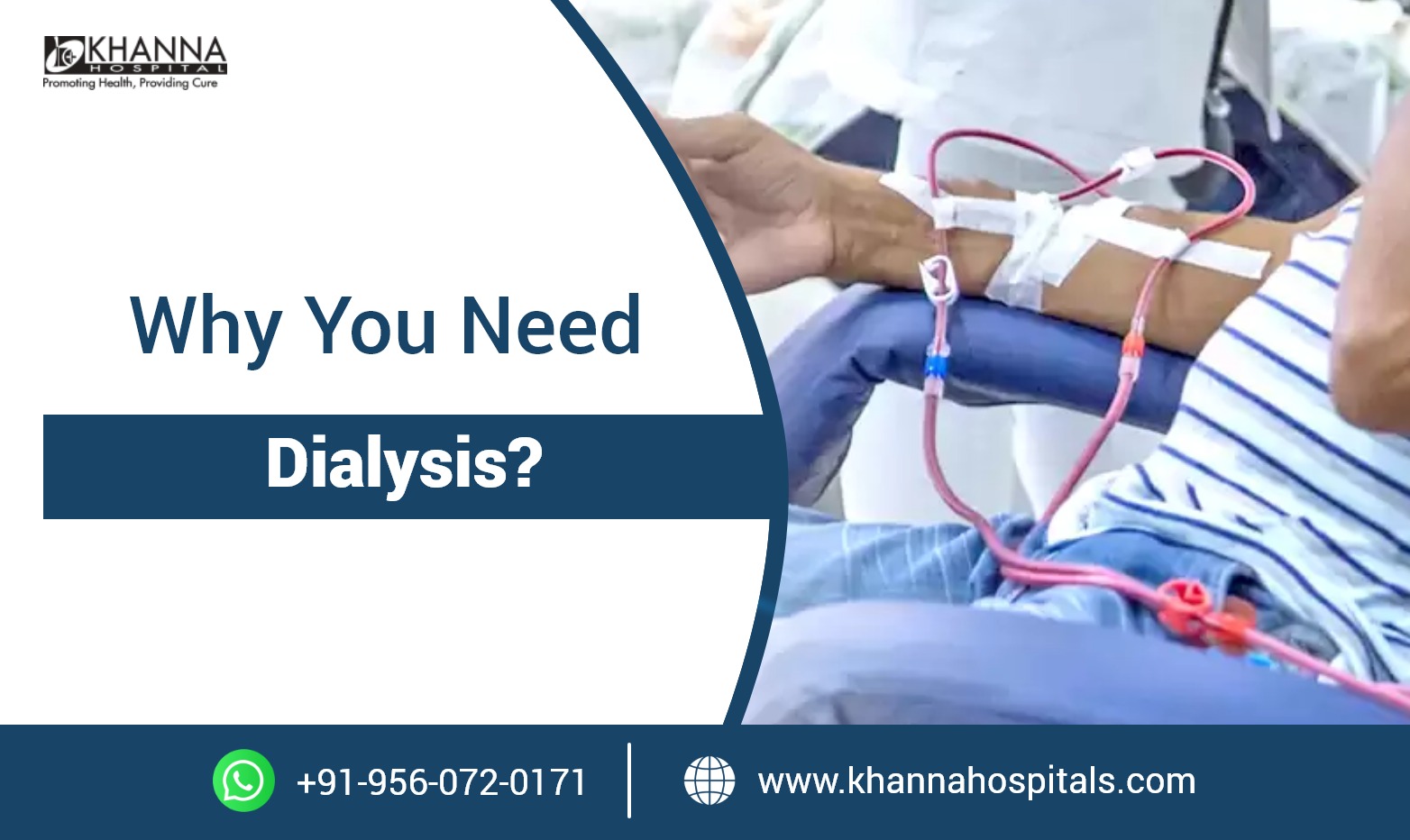


Dialysis is a life-saving medical treatment used when the kidneys are no longer able to function properly. The kidneys play a vital role in filtering waste products, excess fluids, and toxins from the blood. When kidney function becomes severely impaired, dialysis helps perform these essential tasks and supports the body’s balance.
At Khanna Hospital, patients with kidney-related conditions receive expert care, advanced dialysis services, and continuous medical supervision to ensure safe and effective treatment.
What Is Dialysis?
Dialysis is a medical procedure that helps to:
-
Remove waste products and toxins from the blood
-
Control excess fluid levels in the body
-
Maintain a healthy balance of electrolytes such as sodium and potassium
Doctors recommend dialysis when kidney function drops to a critical level and medications or lifestyle changes are no longer sufficient.
Types of Patients Who Are Put on Dialysis
1. Patients with Chronic Kidney Disease (CKD)
Chronic Kidney Disease is a long-term condition where kidney function gradually declines over time. When CKD reaches End-Stage Renal Disease (ESRD), dialysis becomes necessary.
Common causes include:
-
Diabetes
-
High blood pressure
-
Long-standing kidney infections
-
Hereditary kidney disorders
Patients with advanced CKD often require regular dialysis sessions, which are safely managed at Khanna Hospital under the care of experienced specialists.
2. Patients with Acute Kidney Failure (AKI)
Acute Kidney Injury is a sudden loss of kidney function that may occur due to:
-
Severe infections (sepsis)
-
Dehydration
-
Major surgery or trauma
-
Certain medications or toxins
In many cases, dialysis is temporary until kidney function improves. At Khanna Hospital, such patients are closely monitored to determine the appropriate duration of dialysis.
3. Patients with Severe Fluid Overload
When kidneys cannot remove excess fluid, it can lead to:
-
Swelling of the legs, face, or abdomen
-
Difficulty breathing
-
Fluid buildup in the lungs
Dialysis helps remove this excess fluid and provides rapid relief. Khanna Hospital offers advanced dialysis support for patients with fluid overload and related complications.
4. Patients with Dangerous Electrolyte Imbalance
Kidney failure can cause dangerous electrolyte imbalances, especially:
-
High potassium levels that affect heart rhythm
-
Severe acidosis (excess acid in the blood)
Dialysis is used to quickly correct these imbalances and prevent life-threatening complications.
5. Patients with Uremia (Toxin Buildup in Blood)
Uremia occurs when waste products accumulate in the blood due to kidney failure. Symptoms may include:
-
Nausea and vomiting
-
Loss of appetite
-
Confusion or drowsiness
-
Severe itching
Dialysis effectively removes these toxins. At Khanna Hospital, patients with uremia receive prompt diagnosis and timely dialysis care.
6. Patients with Poisoning or Drug Overdose
In certain emergency situations, dialysis is used to remove harmful substances from the bloodstream following poisoning or drug overdose. This is performed under expert medical supervision at Khanna Hospital.
7. Patients Waiting for a Kidney Transplant
Many patients depend on dialysis while awaiting a kidney transplant. Dialysis helps maintain their health and quality of life until a suitable donor kidney becomes available.
How Doctors Decide When Dialysis Is Needed
Doctors at Khanna Hospital evaluate several factors, including:
-
Blood test results (creatinine, urea, potassium levels)
-
Urine output
-
Symptoms such as breathlessness, swelling, or confusion
-
Overall medical condition of the patient
Dialysis is recommended only when it is medically necessary and beneficial.
Types of Dialysis Available at Khanna Hospital
Based on individual patient needs, dialysis options may include:
-
Hemodialysis – blood is filtered using a dialysis machine
-
Peritoneal Dialysis – the lining of the abdomen helps filter blood
The most suitable method is chosen after careful evaluation by the medical team.
Conclusion
Dialysis is essential for patients whose kidneys are unable to function effectively due to chronic disease, sudden failure, or serious complications. It may be a temporary or long-term treatment depending on the underlying condition.
At Khanna Hospital, patients receive comprehensive kidney care, modern dialysis facilities, and compassionate medical support to ensure the best possible outcomes.
For more information about dialysis services at Khanna Hospital or to book a consultation, please contact our medical team.