

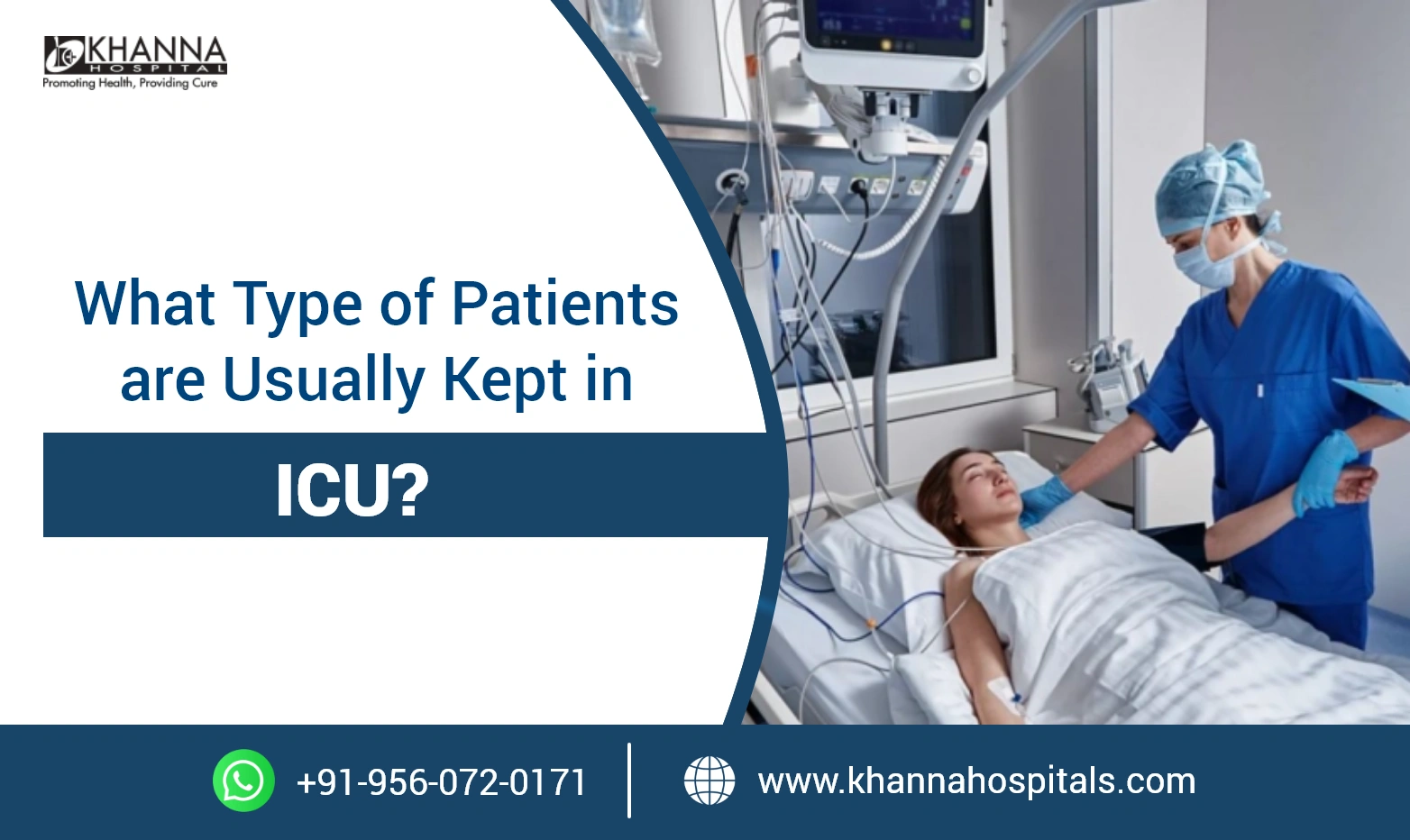
The Intensive Care Unit (ICU) is a specialized hospital department designed for patients who are critically ill and require constant monitoring, advanced medical support, and immediate intervention. ICU care is delivered by a highly trained team of doctors, nurses, and technicians using sophisticated medical equipment.
Ask Your Query
In this blog, we explain which types of patients are usually admitted to the ICU, why ICU admission is necessary, and how ICU care differs from general ward treatment.
What Is an ICU?
An ICU is meant for patients whose medical conditions are life-threatening or unstable. These patients typically need:
-
Continuous monitoring of vital signs (heart rate, blood pressure, oxygen levels)
-
Advanced life-support equipment
-
Specialized medical and nursing care available 24/7
ICU admission may be temporary or prolonged, depending on the patient’s condition and recovery progress.
Types of Patients Commonly Admitted to the ICU
1. Patients with Severe Breathing Problems
Patients who cannot breathe properly on their own often require ICU care, including those with:
-
Severe pneumonia
-
Acute Respiratory Distress Syndrome (ARDS)
-
Severe asthma attacks not responding to treatment
-
COVID-19 or other serious lung infections
Such patients may require ventilator support or high-flow oxygen therapy.
2. Patients with Heart-Related Conditions
ICU care is crucial for patients with serious cardiac conditions such as:
-
Heart attack (myocardial infarction)
-
Life-threatening irregular heart rhythms (arrhythmias)
-
Heart failure
-
Cardiogenic shock
These patients need continuous cardiac monitoring and immediate medical intervention.
3. Patients After Major Surgery
Certain high-risk surgeries require close post-operative monitoring, including:
-
Heart surgery (bypass, valve replacement)
-
Brain or spinal surgery
-
Organ transplants
-
Major trauma or accident-related surgeries
ICU observation helps detect complications early and ensures a safe recovery.
4. Patients with Severe Infections (Sepsis)
Sepsis occurs when an infection spreads into the bloodstream and affects vital organs. ICU admission is required for:
-
Septic shock
-
High fever with dangerously low blood pressure
-
Organ failure caused by infection
Immediate antibiotics, IV fluids, and organ support are essential.
5. Patients with Brain and Neurological Conditions
Critical neurological cases often require ICU care, including:
-
Stroke
-
Head injury or brain trauma
-
Brain hemorrhage
-
Uncontrolled seizures (status epilepticus)
-
Coma or reduced level of consciousness
Continuous neurological monitoring helps prevent permanent damage.
6. Trauma and Accident Patients
Patients with multiple or severe injuries from accidents may require ICU admission, such as:
-
Road traffic accidents
-
Serious falls
-
Burns
-
Internal bleeding
ICU teams manage breathing, bleeding, pain, and organ function simultaneously.
7. Patients with Organ Failure
When vital organs stop functioning properly, ICU care becomes essential. This includes:
-
Kidney failure (requiring dialysis)
-
Liver failure
-
Multiple Organ Dysfunction Syndrome (MODS)
Life-support systems help maintain organ function while treatment continues.
8. Patients Requiring Life Support
Some patients cannot survive without advanced medical machines, such as:
-
Mechanical ventilators for breathing
-
Dialysis machines for kidney support
-
Infusion pumps for critical medications
Such care is only possible in a fully equipped ICU.
How Is ICU Different from a General Ward?
| ICU | General Ward |
|---|---|
| 24/7 continuous monitoring | Periodic monitoring |
| High nurse-to-patient ratio | Lower nurse-to-patient ratio |
| Advanced life-support equipment | Basic medical facilities |
| Critically ill patients | Stable or recovering patients |
When Is a Patient Shifted Out of the ICU?
Once a patient’s condition stabilizes and no longer requires intensive monitoring or life support, they are shifted to a step-down unit or general ward for continued recovery.
ICU Care at Khanna Hospital
At Khanna Hospital, our ICU is equipped with advanced life-support systems, modern monitoring technology, and a highly experienced team of doctors, intensivists, and trained nursing staff. We provide 24/7 critical care services to ensure timely intervention, patient safety, and the best possible outcomes.
Our ICU services include:
-
Advanced ventilator and respiratory support
-
Continuous cardiac and vital monitoring
-
Management of severe infections and sepsis
-
Post-operative critical care
-
Trauma and emergency critical care
-
Organ failure management
Conclusion
Patients are admitted to the ICU when their condition is serious, unstable, or life-threatening and requires continuous monitoring and advanced medical support. The ICU at Khanna Hospital is designed to deliver high-quality, compassionate, and timely critical care during a patient’s most vulnerable moments.
By combining medical expertise with modern technology, Khanna Hospital ensures that patients receive the best possible care until they are stable enough to move to a general ward.
For more information about ICU services at Khanna Hospital or to book a consultation, please contact us today.