

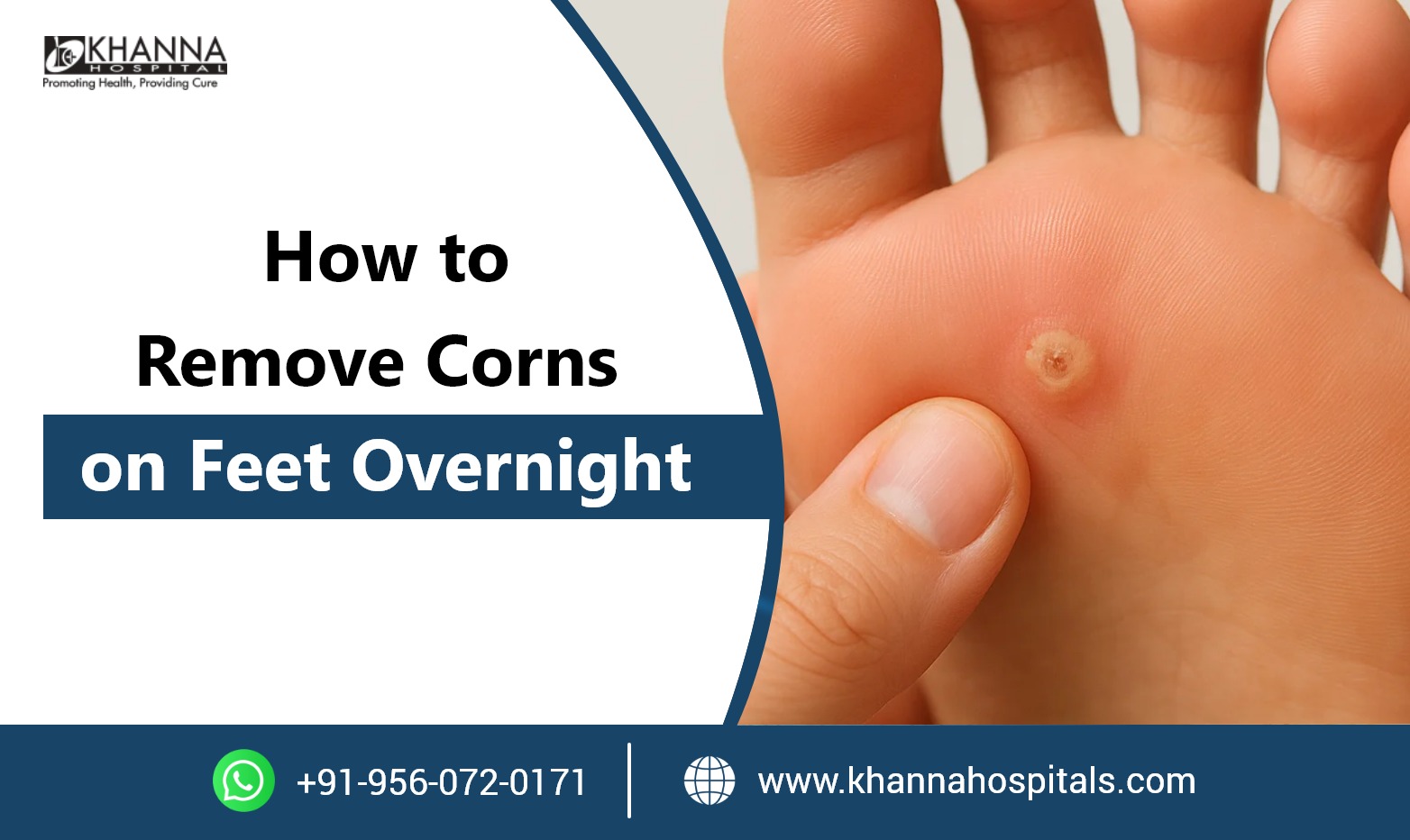
A corn on your foot can turn every step into a painful experience. It’s no surprise that “how to remove corns on feet overnight” is one of the most searched questions by people looking for quick relief. The honest answer: corn cannot be fully and safely removed in a single night but the right home care can significantly reduce pain and swelling within hours, and set the corn up to clear over the next few days.
Ask Your Query
This guide covers safe home remedies for fast relief, common mistakes that make corns worse, and the point at which you should stop self-treating and see a doctor.
What Is Corn and Why Does It Form?
A corn is a small, thickened, and often painful area of skin that develops from repeated friction or pressure. Corns commonly appear on the tops and sides of toes, between toes, or on the soles of the feet.
Common causes include:
- Wearing tight, narrow, or ill-fitting shoes
- Frequent use of high heels or hard-soled footwear
- Walking or standing for long periods
- Wearing shoes without socks, which increases friction
- Underlying foot structure issues such as bunions, hammertoes, or bone spurs
- Repeated pressure from certain sports or activities
Corn vs. Callus vs. Plantar Wart: Know the Difference
Many people confuse corns with calluses or warts, but the treatment approach differs for each:
| Feature | Corn | Callus | Plantar Wart |
| Size | Small, well-defined | Larger, spread out | Small, may have black dots |
| Location | Toes, between toes | Soles, heels | Soles, weight-bearing areas |
| Pain | Often painful when pressed | Usually less painful | Painful, especially standing |
| Cause | Friction/pressure | Friction/pressure | HPV virus infection |
If you’re unsure which one you have, it’s best to get it checked rather than guess and treat it incorrectly.
Home Remedies for Fast Relief
These steps won’t remove a corn overnight, but they can noticeably ease pain and soften the corn so it resolves faster.
1. Soak Your Feet in Warm Water
Soak your feet for 15–20 minutes in warm water before bed. Adding Epsom salt helps soften the thickened skin faster and reduces discomfort overnight.
2. Gently File with a Pumice Stone
After soaking, use a pumice stone or foot file to gently smooth the top layer of the corn. Always work in one direction with light pressure — never scrape aggressively, as this can injure healthy skin underneath.
3. Apply a Urea or Salicylic Acid-Based Cream
Over-the-counter foot creams containing urea or a low concentration of salicylic acid can help soften and gradually break down thickened skin. Apply as directed and avoid the surrounding healthy skin.
4. Use Corn Pads or Cushioning
Doughnut-shaped corn pads or moleskin relieve pressure on the affected area, which reduces pain almost immediately and prevents the corn from worsening.
5. Switch to Well-Fitted, Cushioned Footwear
Avoid tight or narrow shoes until the corn heals. Choose shoes with a wide toe box and soft insoles to reduce friction.
6. Moisturize Daily
Keeping the skin around the corn well-moisturized prevents further hardening and cracking.
Mistakes to Avoid
- Never cut or shave the corn yourself with a blade, scissors, or razor. This significantly increases the risk of cuts and infection.
- Do not self-treat if you have diabetes, poor circulation, or nerve damage in your feet. Even a minor injury can lead to serious complications.
- Avoid overusing acid-based corn removal pads, as they can irritate or burn healthy skin if left on too long.
- Stop all home treatment immediately if you notice bleeding, pus, or spreading redness these are signs of infection.
- Don’t ignore recurring corns; treating the symptom without addressing the cause (like footwear or foot structure) means it will keep coming back.
When Should You See a Doctor?
Home care works well for mild, uncomplicated corns, but certain situations call for professional treatment:
- You have diabetes, poor blood circulation, or peripheral neuropathy
- The corn is very painful, swollen, red, or oozing
- There’s no improvement after 1–2 weeks of consistent home care
- The corn keeps returning in the same spot
- You notice signs of infection (warmth, pus, foul odor, red streaking)
- Pain is affecting your ability to walk normally
A doctor or podiatrist will typically assess the corn’s cause and severity before recommending treatment that may include professional debridement, medicated solutions, footwear/orthotic advice, or a minor in-clinic procedure for stubborn or recurring corns. Diabetic patients in particular should be evaluated carefully, since foot complications can escalate quickly if left untreated.
Tips to Prevent Corns from Coming Back
- Always choose shoes with a wide toe box and proper arch support
- Wear moisture-wicking socks to reduce friction
- Use protective pads in high-friction areas before problems start
- Get any underlying foot structure issues (bunions, hammertoes) evaluated
- Moisturize your feet regularly to keep skin supple
- Rotate footwear rather than wearing the same tight pair daily
FAQs:
Q.1 Can a corn on the foot really be removed overnight?
Not completely. A corn cannot be fully removed in one night, but soaking in warm water and gently using a pumice stone can noticeably reduce pain and swelling overnight. Full resolution usually takes a few days to two weeks with consistent care.
Q.2 What is the fastest way to get rid of corn?
The fastest safe approach combines warm water soaks, gentle pumice stone filing, a urea or salicylic acid-based cream, and cushioned padding to relieve pressure. For a lasting solution, a doctor can remove it professionally in a single visit.
Q.3 Is it safe to cut corn off myself?
No. Cutting a corn yourself with a blade or scissors carries a high risk of infection and injury, especially for people with diabetes or poor circulation. This should only be done by a trained professional.
Q.4 Can diabetics treat foot corns at home?
It’s not recommended. Diabetic patients are prone to slow-healing wounds and infections, so even a small nick from self-treatment can become serious. A podiatrist or doctor should manage corn in diabetic patients.
Q.5 Why does my corn keep coming back?
Corns return when the underlying cause — usually ill-fitting shoes or a foot structural issue — isn’t addressed. Treating the corn without fixing the cause only offers temporary relief.
Q.6 Is surgery needed to remove corn?
Rarely. Most corn is treated successfully with medicated applications or an in-clinic procedure. Surgery is only considered for severe, recurring cases, often linked to an underlying bone deformity.
Q.7 How long does it take for a corn to heal completely?
With consistent home care, mild corns typically improve within 1–2 weeks. Larger or long-standing corns may take longer and often heal faster with professional treatment.
In summary:
Home remedies can bring fast relief from corn pain, but truly safe and lasting removal often requires a doctor’s evaluation — especially if you have diabetes, notice signs of infection, or the corn keeps recurring. Don’t delay professional care when these signs appear.